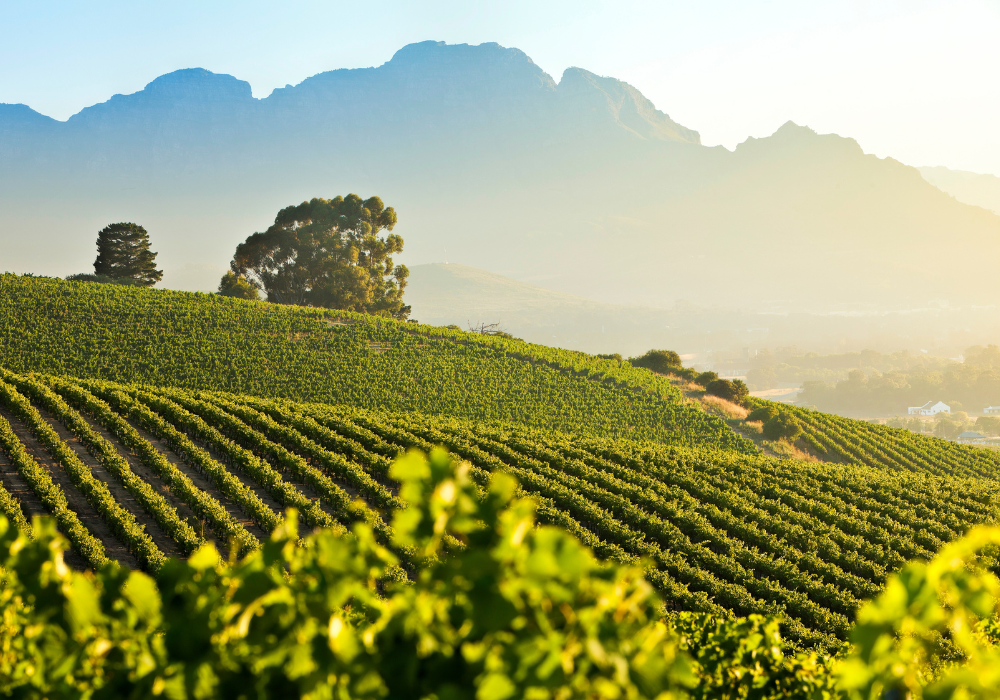
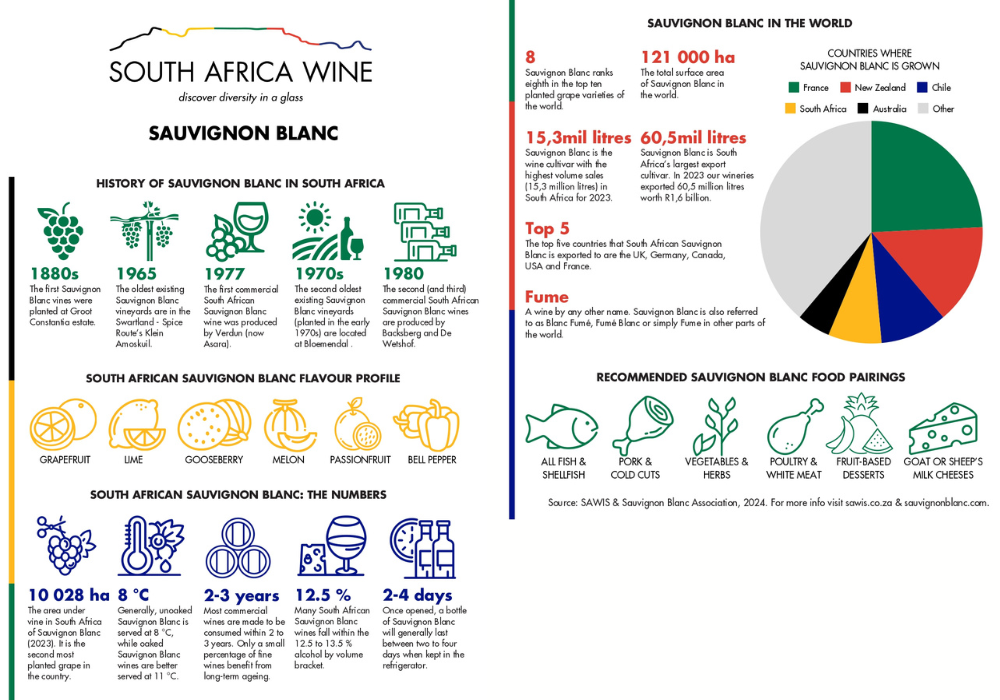
Photo: Stellenbosch Wine Routes, Stellenbosch vineyards (www.wosa.co.za)
South Africa’s wine production benefits from its warm Mediterranean climate, complemented by various cooling influences. Several mountain ranges and cooling breezes, particularly the Benguela Current from the Antarctic, moderate high daytime temperatures and facilitate slower ripening. This promotes intensity of aromas while retaining acidity in grapes. Strong south easterly winds known as the Cape Doctor are prevalent in summer period and can cause heavy rains in Western Cape. The range of altitudes, soil types, and aspects further diversify the growing conditions, allowing for the cultivation of a wide range of grape varieties and the production of various wine styles, from high-volume affordable wines to premium quality offerings.
South Africa is renowned for its distinctive Chenin Blanc and Pinotage, which both casual consumers and wine professionals appreciate. Certain styles, such as “Coffee Pinotage” and “Cape Blends” (both reds and whites), have gained huge popularity in both domestic and international markets. The absence of official regulations for Cape Blends allows producers the flexibility to use a range of varieties and create different styles.
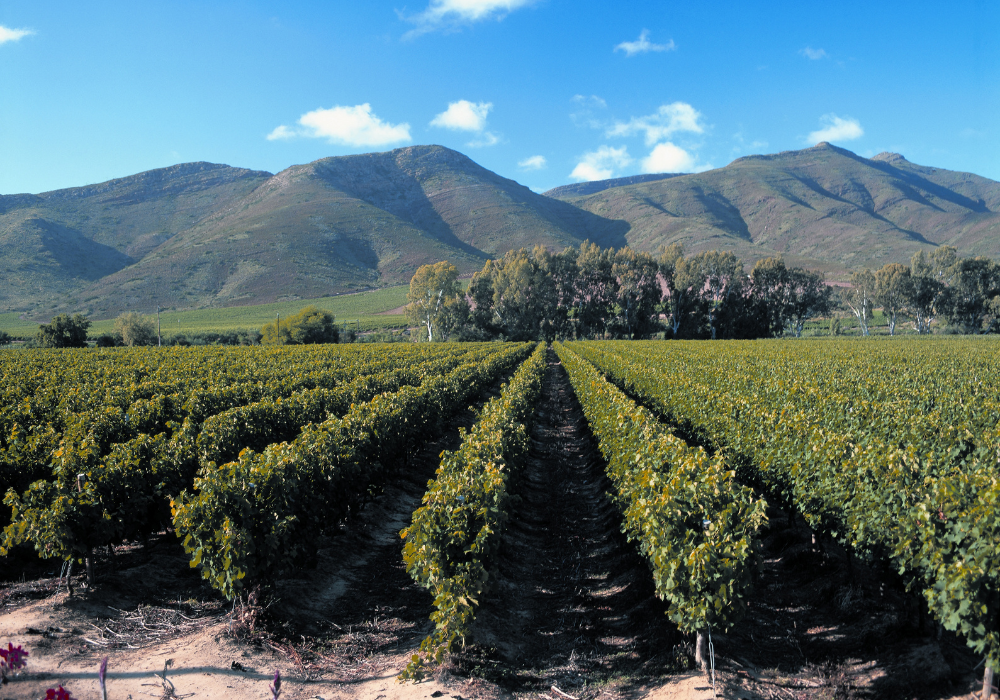
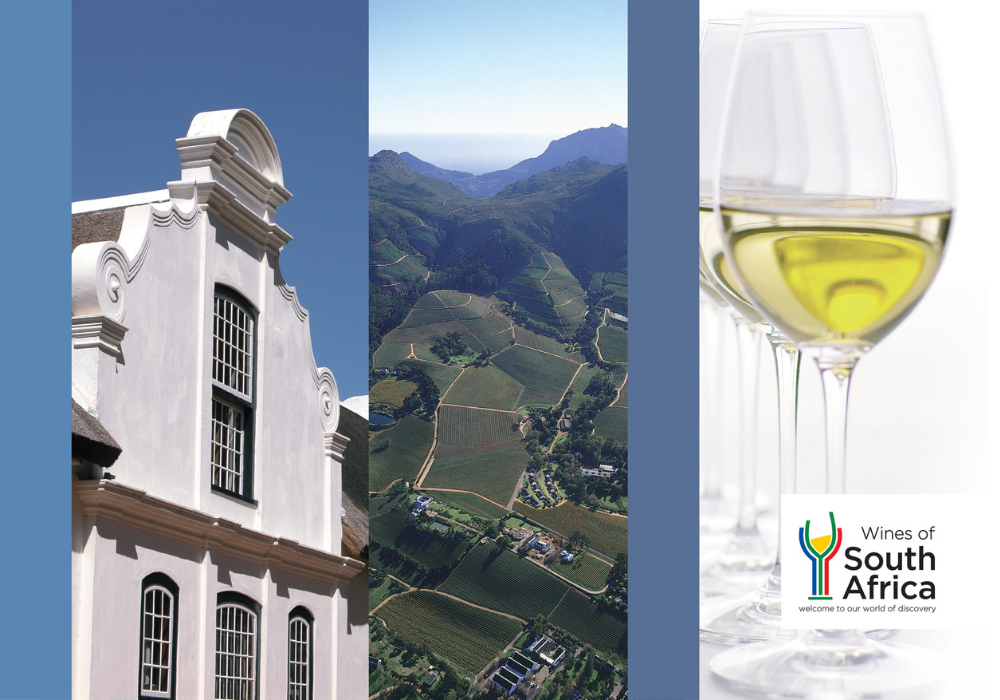
Photo: Vineyards around Robertson (www.wosa.co.za)
The constant improvement in grape growing and winemaking techniques has led to a rise in quality in time. After the end of Apartheid and the African National Congress democratic elections, the export market experienced a boom. Producers finally gained the power to decide the wines to be produced, including styles, quality, volumes, and price range. Therefore, they could market and sell their wines directly to consumers, importers, or retailers. Many producers started travelling abroad to access knowledge and consult with well-known winemakers, constantly improving their capabilities.
Producers have access to various certification bodies that can guarantee quality standards to consumers. Producers can adhere to the Wine of Origin scheme system and certify wines within the Integrated Production of Wine system, which about 90% of export producers use. Additionally, they can obtain certifications such as Sustainable Wine of South Africa or the Integrity and Sustainability seal. The WOSA plans to display these certifications on a single seal, providing a valuable marketing tool.
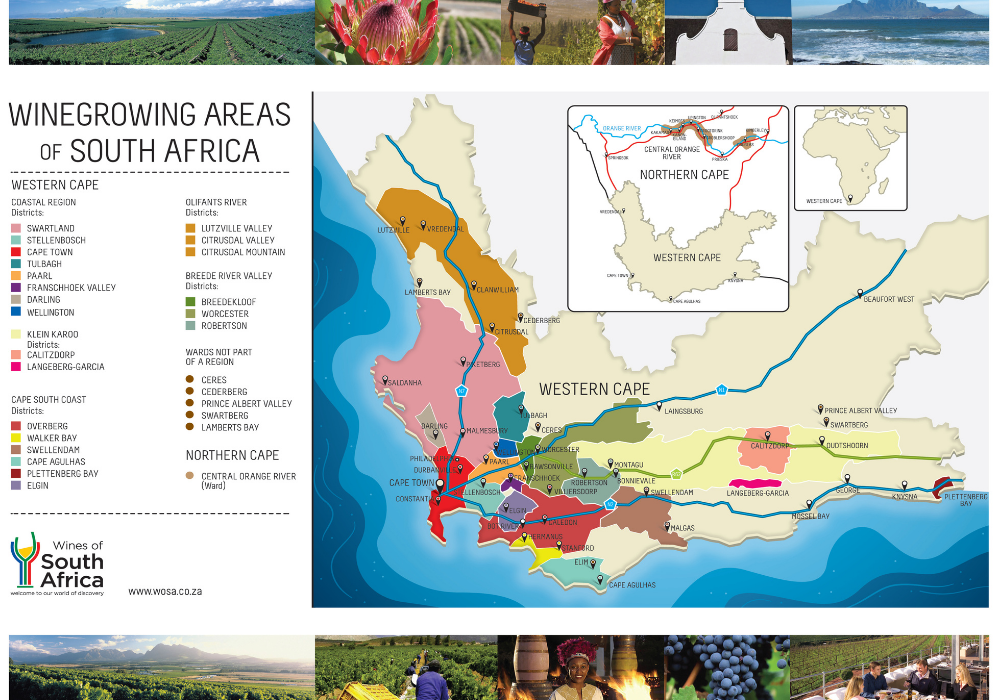
Photo: www.wosa.co.za
Producers in South Africa benefit from more relaxed regulations than those in European countries. The use of irrigation also helps to ensure reliable production. While most vineyards are located in the Western Cape, different regions, districts, and wards have varying water availability due to average annual rainfall ranging from 300 to 1000 mm per year, as well as different soil types with varying water holding capacities. Some regions, like Swartland, are known for their dry-farmed vineyards, and there are many bush vine plantings. Wines produced from these plantings are often of higher quality, giving farmers a significant marketing advantage. Additionally, certain districts (e.g., Stellenbosch or Swartland), wards (e.g., Constantia or Durbanville), and producers (e.g., Boekenhoutskloof) are well-known worldwide, further enhancing the reputation of South African wines in export markets.
Another advantage is the widespread availability of inexpensive manual labour. Many flat vineyards and gentle slopes allow for mechanisation, reducing production costs on a large scale for high-volume production, thus helping to achieve lower and more competitive prices.
WOSA (Wines of South Africa) non-profit promotional body plays a crucial role in actively and collectively promoting South African wine, both domestically and abroad. Their efforts include educational activities, such as the WOSA Online Academy, to enhance consumers’ and industry professionals’ understanding and appreciation of South African wine.
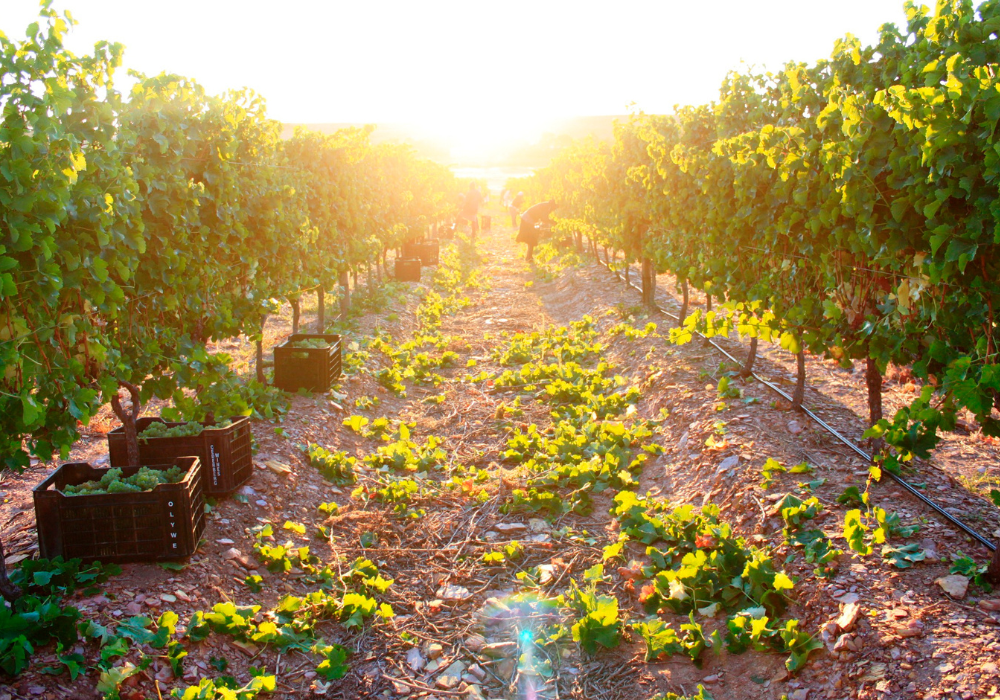
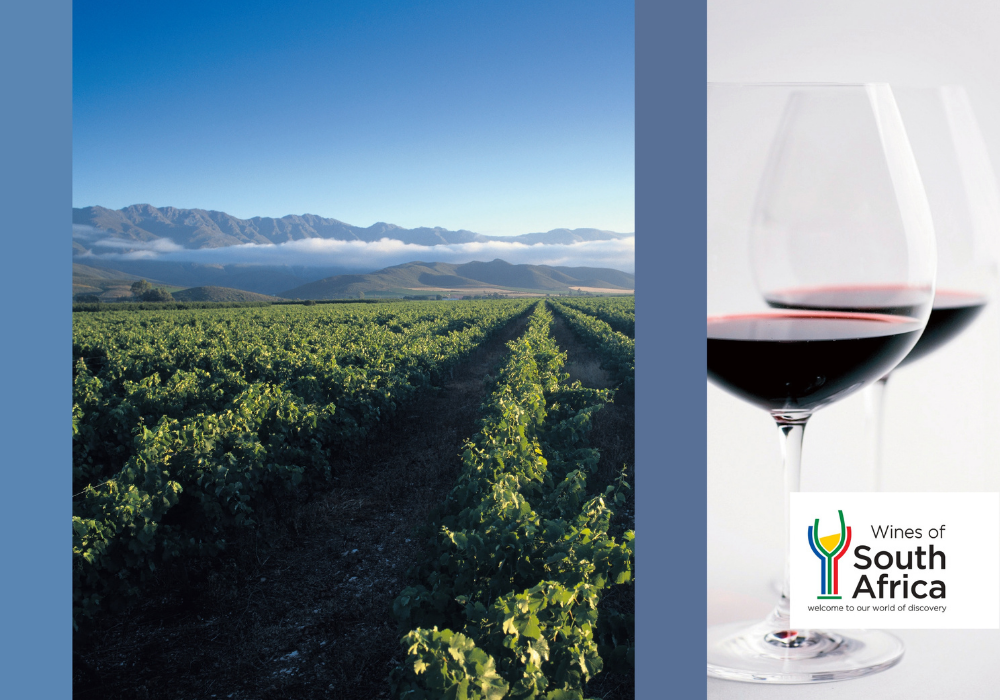
Photo: Elim, www.wosa.co.za
Wines of Origin System
The law recognises five different sizes of the production area.
In decreasing order of size, there are:
- Geographical Unit – catch-all appellation allowing for multi-regional blends, eg. Western Cape.
- Regions – large areas which follow dominant geographical features, eg. Coastal Region or Breede River Valley.
- Districts – smaller areas which can vary in size but which share environmental features influence the style of the wines, eg. Stellenbosch or Swartland.
- Wards – areas of similar soil and geography producing wines of a distinct style, eg. Durbanville or Constantia.
- Single vineyards – area of less than six hectares consisting of a single variety.
Grape varieties
Focus on Pinotage
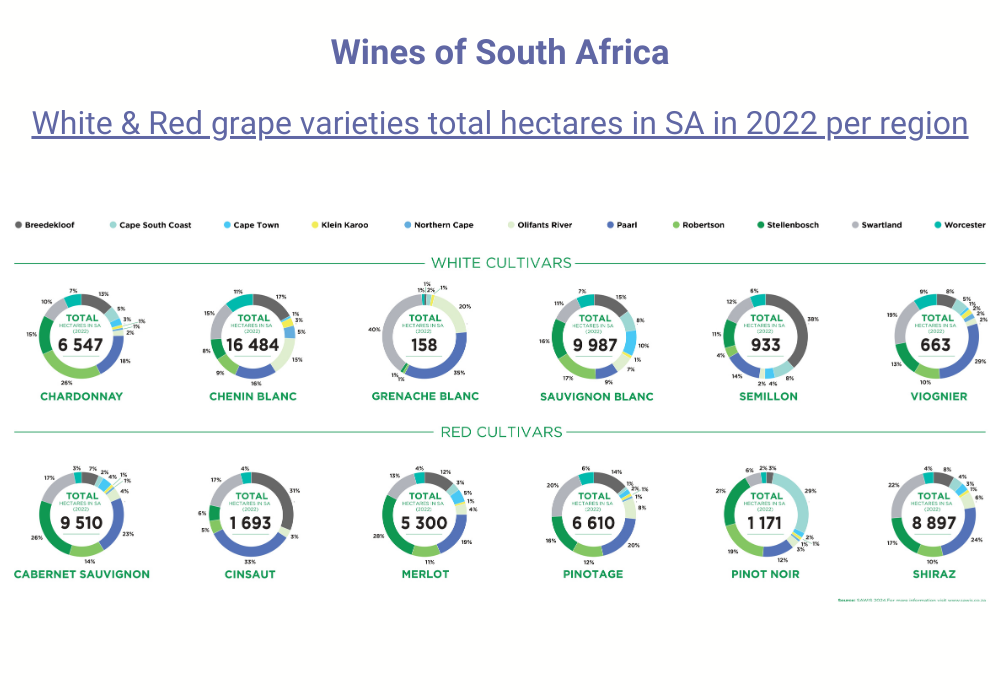
Pinotage makes up about 7.4% of red grape variety plantings. It is used to make wine in a wide range of styles, from fruity and unoaked to structured and complex reds, as well as rosè. ‘Coffee Pinotage’ is a popular style with consumers. ‘Cape Blends’ should contain at least 30% Pinotage (as mentioned, not legislated). Pinotage from cooler sites typically gives a red fruit-forward aroma and flavour profile with a touch of leather and spices. The warm-climate profile shows notes of blackberries, liquorice, and game.
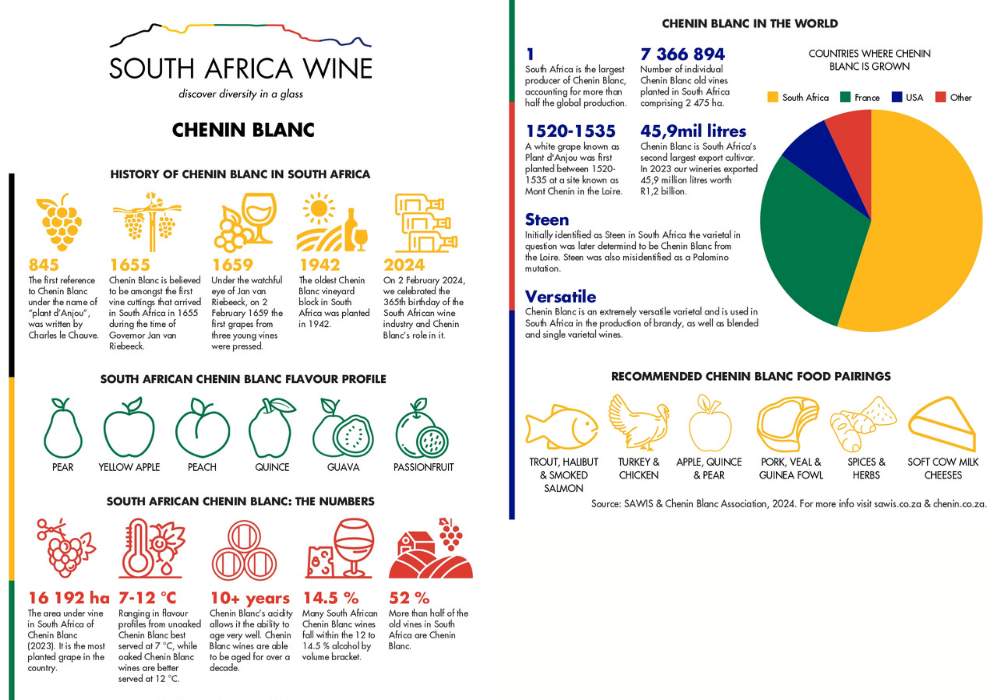
Focus on Chenin Blanc
Originally, it was called ‘Steen’, but this name is no longer used. Chenin is made in all styles, from bone-dry to lusciously sweet, as sparkling, fortified or in Cape blends. The vineyard area is in decline, but old vines, particularly bush, are much prized. The profile of cool-climate Chenin shows apples, pears, and almond blossom notes. The warm-climate Chenin displays honey, tropical, and stone fruit.
Other grape varieties
In 1996, 80% of the vineyard area was white grape varieties (mostly used for brandy production), while in 2017, this percentage decreased to 55%. White varieties have started to be replanted again, most international, predominantly French. Increased water shortages led to experimenting with hot-climate, Mediterranean varieties.
Chardonnay, Sauvignon Blanc, and Colombar(d) are widely planted white varieties. The latter is often referred to without the ‘d’, which is much used in brandy production and simple, inexpensive ‘dry white’ wines. The Hanepootand Muscadel is a traditional Afrikaans name for Muscat d’Alexandrie (Hanepoot) and a general name used to describe Muscat de Frontignan and Muscat Blanc à Petit Grains (Muscadel can be red or white). It is generally made into fortified, and dessert wines. Sherry-style fortified wines are mostly based in Chenin.
Red grape varieties are Cabernet Sauvignon, Shiraz, Merlot, often blended as Bordeaux blend or even with Pinotage. Pinot Noir is largely used in traditional-method sparkling wine production, while Touriga Nacional, Tinta Roriz, and Tinta Barocca are made to create Port-style fortified wine production, but also increasingly blended and used for still wines as well.
Cape blend
Cape white blends are Chenin- and Bordeaux white varieties-based, made in all quality and price ranges, from simple inexpensive to premium and complex wines. Bordeaux varieties are increasingly used, particularly to create premium cuvées. Inexpensive or mid-priced Cape white blend is often made from Chenin Blanc, Sauvignon Blanc, as well as Viognier, Chardonnay or Colombard and is generally unoaked, made as an easy-drinking, everyday wine.
Premium Cape white blend is often based on Chenin Blanc, but could include a range of different varieties with many top wines blend up to four different varieties or more. The relaxed rules allows for innovative solutions with increasing interest toward Rhône varieties, resistant to drought conditions. Key blending partners are Viognier, Chardonnay, Semillon, Roussanne and Grenache Blanc. Wines are often aged in old oak barrels. The category gained high reputation in both, domestic and export markets.
Red wine styles include:
- Cape red blends
- ‘Chocolate/coffee’ wines
- Bordeaux blends
- Mediterranean red blends
- Dry reds
- Fortified
Cape Red Blend
Generally accepted that it contains Pinotage, and as we said, there are no official rules. Pinotage Association’s competition rules require minimum of 30% and maximum 70% of Pinotage variety for Cape red blends. The aim is to maintain the distinctive South African character in wines. Tend to be premium in quality.
Chocolate/Coffee Wines
The first was made in 2001 by Bertus Fourie, winemaker at Diemersfontein Wines estate in Wellington. The lack of space in the winery forced to ferment Pinotage with toasted staves, transferring distinctive coffee and chocolate flavours. The style became popular style among consumers, consequently spreading in export markets within mass markets such as supermarkets and deep discounters. Many other versions were subsequently created, often made with the help of micro-oxygenation to better integrate oak-derived flavours with fruity ones. Other grape varieties were then vinified similarly.
Bordeaux Red Blends
This term refers to the combination of two or more of grape varieties such as Cabernet Sauvignon, Cabernet Franc, Merlot with Petit Verdot and Malbec increasingly used here for blends. Many estates’ flagship wines are represented by Bordeaux blends.
Mediterranean Red Blends
I problemi di conservazione idrica incoraggiano l’aumento delle piantagioni di varietà mediterranee, in particolare dall’Italia meridionale, dalla Spagna e dal Portogallo. L’interesse principale è per Grenache Noir, Cinsaut (Cinsault), Carignan, Mourvèdre e Tempranillo. La flessibilità legislativa implica l’utilizzo dei blend partner anche molto insoliti. I premium blend spesso contengono quantità significative di uve da vecchie viti, come Cinsaut (Cinsault), Grenache Noir e Carignan, con viti di circa 100 anni di età. I prezzi variano da entry level a premium per questi vini. In origine erano utilizzati per la produzione dei vini fortificati e oggigiorno i produttori si concentrano principalmente su vini fermi da questi vitigni e vecchie viti.
Dry Still Reds
Dry still reds is a general term for entry-level wines or some high-volume wines, often blended and popular labels. The best versions are made up of fruit from older plantings of Cinsaut (Cinsault) or Grenache. Ruby Cabernet (US crossing of Cab Sauvignon x Carignan) is very popular in hotter regions.
Sparkling Wine
Two main categories represent sparkling wines of South Africa:
Carbonated, simple, and fruity wines, often made from an off-dry to sweet style, are generally produced by stopping fermentation early to retain residual sugar, then carbonated and released early to preserve aromatics and freshness.
Méthode Cap Classique (MCC) is a Traditional Method Sparkling Wine, rebranded recently as Cap Classique. Wines are mainly made from Chardonnay and Pinot Noir, as well as Chenin Blanc and Pinotage. The Cap Classique Producers’ Association was founded in 1992, and its members produce over 90% of bottle-fermented sparkling wine in South Africa. The Association’s standards require that the wine undergo a second fermentation with a minimum pressure of 3 bars post-disgorgement and spend at least 12 months on the lees during the second fermentation. Additionally, the Association plans to introduce a higher-quality category that would restrict the grape varieties allowed, mandate whole bunch pressing (though not currently mandatory), and require a longer ageing period on the lees. Cap Classique is the country’s fastest-growing category, with sales doubling approximately every five years in recent decades. (Source: WSET Diploma study materials).
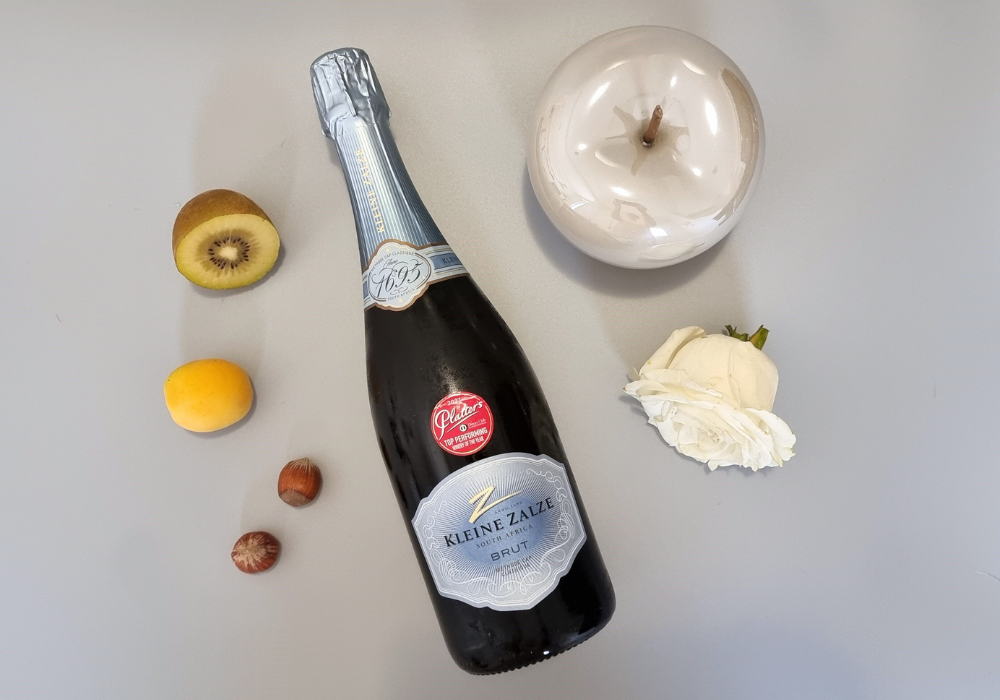
Photo: Kleine Zalze Cap Classique
Sweet wines are made in the following categories:
- Special Late Harvest (no fortification/sweetening, min 11%)
- Noble Late Harvest (no fortification/sweetening, min 50 g/l, Chenin, Riesling, Semillon)
- Naturally sweet (grapes dried on vine/off vine/straw wines, no fortification/sweetening. Min residual sugar of 20 g/l. Many inexpensive, some premium)
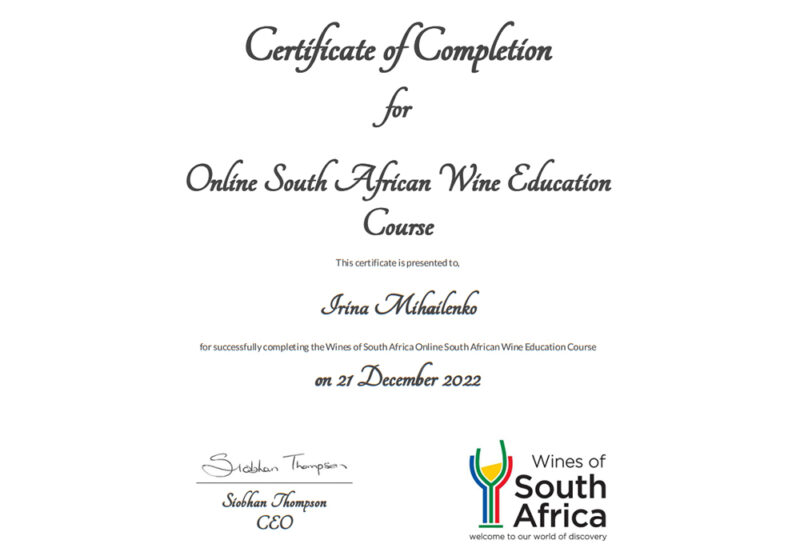
My articles often target wine students. This one is based on my WSET Diploma studies and works as well as the Wines of South Africa Education course, recently divided into two levels. This part can give the basis for SWOT, referring to advantages. I also advise completing the free course through the link below.
Link Level 1: Wines of South Africa online course Level 1
Link Level 2: Wines of South Africa online course Level 2

Published by Irina Mihailenko DipWSET
Originally from Latvia and based in Italy for more than 30 years, for about twenty, I worked as a food and wine consultant. For four years, I directed the Tola Rasa fine dining restaurant in Padua. I am a professional sommelier of the two most important Italian associations, AIS and FISAR, DipWSET (Diploma L4 in Wines, London School), Valpolicella Wine Specialist, Wine Judge, Official Port, Sherry and Cava Educator, Langhe Wines Ambassador, SSA Certified Sake Sommelier and Rice Sommelier.
I am a founder and project manager at Tooscans, e-commerce dedicated mainly to Tuscan products, with offline distribution. I created the Sparkling Life website, which is published in three languages and focuses on Italian food and wine excellence. I also deal with consulting, communication, digital mktg & branding strategy and wine education.
Find out more: Irina Mihailenko